
Why Journalism Matters
China's Foreign Exchange agency secretly buys into European property and infrastructure. Tracking dodgy Chinese dosh in London real estate. Celebrating the environmental journalist of the year

4 minute read
The rise and rise of Chinese power in Europe—through hidden asset acquisition
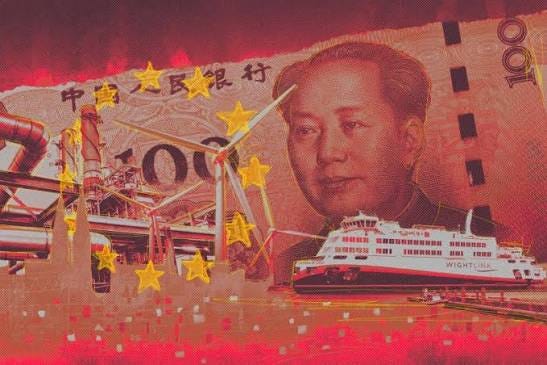
It seems not a week goes by without investigations highlighting the influence that China-- particularly the centralised power of the Chinese communist party-- is having across the world.
Whether it’s investments in African resources or the manipulation of Chinese organised criminal syndicates in the US and Canada, not to mention the influence of companies like Tiktok and Temu, there is no doubting the inexorable rise of Chinese power around the world. The planet’s biggest communist state is intent on beating capitalist countries at their own game.
This month we report on the most recent investigation by the Organised Crime and Corruption Reporting Project (OCCRP) on how the Chinese central bank has been able to mask large-scale investments across Europe using Luxembourg shell companies as well as corporate entities in offshore jurisdictions.
As is usually the case, this OCCRP investigation has been exhaustively researched and presented in an accessible and comprehensive fashion.
This investigation is the work of OCCRP reporters Ingrid Gercama,Tom Stocks and Antonio Baquero
The trio learned that China has acquired critical stakes in European infrastructure, and that Beijing’s investments remain largely invisible to the general public and taxpayers.
As the OCCRP team reports: “From a gas company in Spain to a police headquarters in Belgium, an agency directed by China’s central bank has been quietly acquiring stakes in companies and properties across Europe over the past decade.”
Powerful agency
It’s time to be introduce SAFE.
The State Administration of Foreign Exchange (SAFE) is a powerful Chinese state agency under the control of the State Council, the centre of administrative power in the People’s Republic of China.
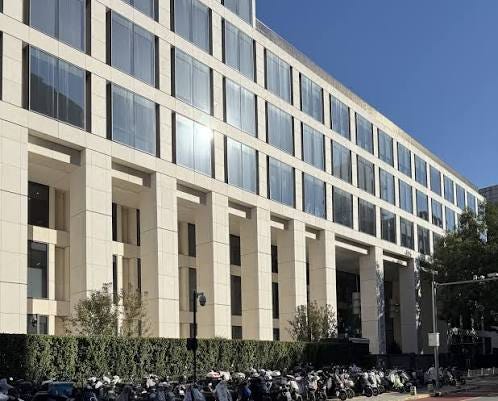
SAFE is the foreign exchange management administrative body of the People’s Bank of China, the country’s central bank. It has headquarters in Beijing as well as branches and offices in all provinces, autonomous regions and municipalities of China. It also maintains offices in Hong Kong, Singapore, London and New York.[2]
Most importantly it manages China’s foreign exchange reserves on behalf of the Bank of China. In April this year those reserves were worth a staggering $USD3.41 trillion.
According to experts who spend their time concentrating on Chinese foreign investment and trade, SAFE operates by shrouding its investments and decision-making in secrecy.
“SAFE recently has gone to significant lengths to mask the size of its investments, so it clearly is keen to stay out of the limelight,” said Brad Setser, a fellow at the Council of Foreign Relations focused on China and ex-deputy assistant secretary of the US Treasury.
OCCRP and its media partners have revealed for the first time the links between the European holding firms and SAFE.
These include a fibre-optic cable company in France, wind farms in the UK, and the building which houses a luxury hotel in the Netherlands.
The trail begins in Belgium with a lead uncovered by OCCRP’s Belgian partner De Tijd. They found three Luxembourg-registered holding companies that could ultimately be traced back to SAFE which enabled SAFE to acquire a stake in a company that owns buildings which are leased to the Brussels police.
Same positions
Reporters then mapped out all the shareholders and directors associated with those firms and found they held the same positions at 28 other Luxembourg companies. Most of these shared the same address at a building in the country’s capital that also houses an office for the Bank of China, a state-owned commercial bank, plus the French bank BNP Paribas.
In turn those 28 companies are owned—or recently owned—by seven companies in the British Virgin Islands. The owners of these companies are not made public in the BVI register.
But the OCCRP went further by ‘scouring the most recent available annual reports and listings in Luxembourg and the UK, discovering that these seven BVI cmpanies and five others registered there were ‘either nominees acting directly for SAFE, or are controlled by the agency’.
Taking the UK as an example, ‘the agency’s U.K. real estate portfolio includes indirect holdings in commercial properties such as the Cabot Circus shopping centre in Bristol, the Fosse Shopping Park near Leicester, and university accommodation at several U.K. universities’.
Both the European Parliament and European intelligence agencies have been worried about the prospects of ‘economic dependence, espionage, and sabotage connected to China’s economic presence in critical infrastructure and strategic sectors across the EU’.
“It is perfectly clear that ambiguous or hidden ownership structures, especially in strategic economic or infrastructure sectors, can pose a massive risk,” Engin Eroğlu, a German member of the European Parliament representing the centrist Freie Wähler, told OCCRP.
Military facilities
“We already know from the US that Chinese companies, some of which are state-owned, specifically buy land adjacent to military facilities… A similar problem could therefore arise in Europe if we do not gain a clear overview of this non-transparent approach,” he added.
In addition, recent legal decisions have made it more difficult for reporters working in the EU to find out who actually owns corporate entities.
Alex Cobham, the chief executive of the Tax Justice Network told OCCRP: “We should be afraid of anonymity.It is better for all of us to know who owns real estate or critical infrastructure.”
Reference
OCCRP: Mapping China’s investments in Europe
3 minute read
Looking into how the UK property market attracts suspicious Chinese investors

Meanwhile, in London, the OCCRP has been tracking the case of the mysterious Chinese national Yuan Yihua and his $USD68 million property assets in the capital. UK prosecutors are seeking to freeze his assets over suspicions that the cash behind them was obtained illegally.
Although Yin Hua is of Chinese origin he also holds citizenship in Cyprus, Cambodia and the small Pacific-island nation of Vanuatu. He is one of a number of Chinese who own London property and who are suspected of fraud and links to organised crime.
Their activities indicate that the UK property market remains a magnet for illicit funds and money laundering despite recent targeted legislation and increased enforcement efforts.
The National Crime Agency estimates that up to £10 billion ($USD13.3 billion) is laundered through UK property annually.
Freeze order requests
OCCRP reporter Martin Young writes that “Neither the Crown Prosecution Service (CPS) nor the National Crime Agency replied to questions about why Yuan Yihua’s properties had been subjected to freeze order requests.”
“One of the CPS targets has been the Prince Group, a Cambodian conglomerate alleged to have operated a network of scam centres partly staffed by human trafficking victims. In March UK authorities announced a new round of sanctions and asset freezes targeting individuals and entities allegedly linked to the Prince Group.” (See WJM October 2025)
But OCCRP reports that Yuan Yihua has not been sanctioned for links to Prince Group, and he is not listed as a director of any of its key corporate holding companies.
Another Chinese person of interest listed by the CPS is Hu Xiaowei who goes by at least three different identities, and holds at least $USD$45-million worth of property in Britain.
Recently, CPS launched a new “blueprint for tackling serious organised and economic crime,” which puts “asset recovery at the forefront of prosecution strategy.” The CPS reveals that more than $USD707 million has been recovered through “confiscation orders in the last five years.”
The OCCRP reports that Yuan Yihua purchased at least 14 properties across London between June 2021 and January 2025, including a $32-million mansion in the affluent St Johns Wood area.

Of the 14 properties subject to freezing order requests, nine were purchased by Yuan Yihua on a single day — June 23, 2021. Those nine units are all in the Legacy Building, a luxury development in London’s Nine Elms neighbourhood with a rooftop pool overlooking the U.S. embassy.
It must be remembered that the acquisition of property to hide criminal funds is not just a financial crime. When property is bought to store wealth and not to live in, it restricts supply, pushes prices upward and makes it increasingly difficult for legitimate buyers to buy a place to live.
In short, it turns a criminal act into a social problem that affects society as a whole.
Reference
OCCRP report on attempts to freeze property assets in the UK
3 minute read
Meet Costanza Gambarini—an inspiring Italian who is the UK’s environmental journalist of the year

Before WJM packs up for the summer amidst heatwaves and wildfires that are ravaging our world and threatening our existence on this planet, it seems an apposite time to recognise and salute the work of environmental investigative journalists.
There is one female journalist who deserves praise for her expertise and perseverance in tracking down and documenting important stories that reveal the culpability of big corporations and governments who are willing enough to talk the green talk, but often ignore, or seek to hide, the impacts of their actions and decisions.
She is Costanza Gambarini an Italian based in London who works for the non-profit environmental investigative outlet SourceMaterial (“Climate. Corruption.Democracy) after a career at the BBC making current affairs documentaries for their digital platforms.
Her work is considered groundbreaking and impactful, combining complex data analysis and manipulation with on-the-ground reporting that reveals the human stories behind the statistics.
She’s also a skilled photographer and videographer, and in May gained well-earned recognition by winning the Environmental Journalist of the Year prize at the UK Press Awards.
These are just some of the recent stories that she has worked on with SourceMaterial, often in partnership with outlets like Le Monde and The Guardian. (It’s worth noting that SourceMaterial only has a staff of six.)
*A report on how French oil giant TotalEnergies continued to fund Mozambican troops guarding Africa’s biggest liquefied Natural Gas project in Mozambique even when they knew those same troops were implicated in looting, rape and killings. After months of research she travelled to Mozambique securing interviews with victims and their families.
*An investigation of the ‘dark fleet’ carrying sanctioned Russian oil around the world manned with the involvement of companies in the EU. She was also part of an investigation that looked into the oil slicks and related environmental damage linked to this fleet of around 1600 leaky tankers with ‘opaque ownership and patchy insurance’ that pose a significant global environmental hazard.
*Another story—based on water use data and company documents-- revealed how hundreds of thirsty and power-hungry data centres are being built or are already in operation in some of the world’s most arid regions. This investigation into centres owned by Amazon, Google and Microsoft was carried out in cooperation with The Guardian.
In a webinar in early July, hosted by Bellingcat, Gambarini elaborated on the risks and opportunities that she and her colleagues face.
She also emphasised the binary importance of collaboration and corroboration. It is crucial to collaborate with mainstream media outlets as well as with environmental NGOs and campaigners--and to always find multiple sources of information.
Never enough
She commented: “…One source of data is never enough and you should really try to corroborate the data you have, even though it’s coming up in a really nice format from a reliable trading platform.”
As far as climate NGOs and campaigners are concerned, the trick is standing apart from their agendas while still encouraging their co-operation.
“ With environmental journalists or climate journalists you are bound to work with NGOs and activists. And I think the risk there is…how can I use their amazing knowledge and access in a way that keeps me editorially independent…from whatever their opinion or agenda is?
“So it’s really like treating NGOs as sources for stories rather than partners, while at the same time not putting them off working with you.”
And Costanza is the first one to admit this type of journalism is a team sport, acknowledging that she almost never works on a story by herself.
As she explains: “All the stories that I do are very much in partnership with other amazing journalists, from a couple to like 40 journalists spread around Europe.
“If I can’t answer a question, it’s probably because I didn’t do that little bit of reporting that the question is about. And that’s important to say and also like one of the joys of journalism.”
Reference
Bellingcat: Building Environmental Investigations podcast
NB This is the WJM’s last newsletter for the summer. We are taking a break until w/c September 7. If you are one of my many followers I will be sending out notes on various subjects, so please watch out for them. And if you are able to give financial support to the many non-profit organisations we feature in Why Journalism Matters it would be greatly appreciated.
It’s free to subscribe and you can cancel any time, so give it a try!
Contact us on greatjournalismwjm@gmail.com
Follow us on Facebook
facebook.com/whyjournalism matters